 blog
Moisturizer for Ashy Skin That Doesn't Clog Pores
Table of Contents
- Why Ashy Skin Needs a Different Moisturizer Approach
- Noncomedogenic Moisturizer for Dry Skin: What the Label Actually Means
- Moisturizer for Acne-Prone Skin: Balancing Hydration and Clarity
- Cream vs. Lotion for Dry Skin: Which Texture Works Better for Ashiness
- How to Apply Moisturizer to Damp Skin for Maximum Absorption
- Key Ingredients That Hydrate Without Clogging Pores
- Building a Daily Routine to Prevent and Treat Ashiness
- Frequently Asked Questions
Last Updated: October 18, 2026
Why Ashy Skin Needs a Different Moisturizer Approach
Ashy skin is more than dryness: it's a grayish or whitish cast on melanin-rich skin when the moisture barrier breaks down and dead cells accumulate.
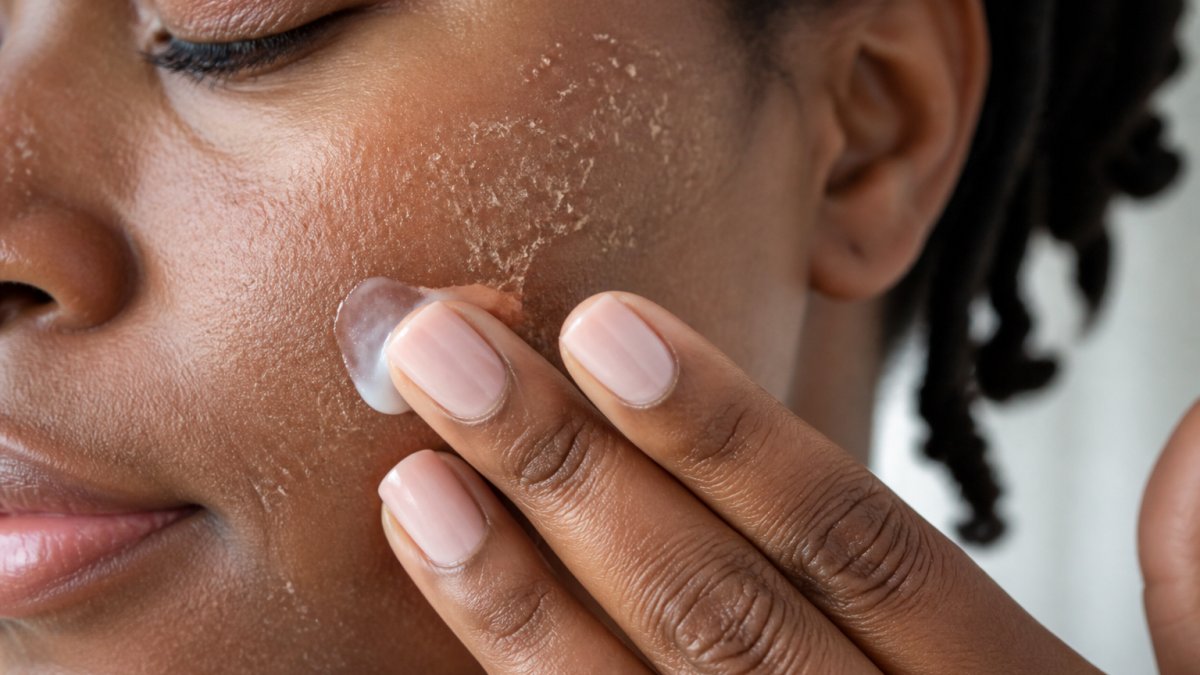
Heavy creams for extreme dryness can sit on top of skin or trap bacteria, causing breakouts, while lightweight lotions often lack lasting hydration. Clear Essence® formulates moisturizers for melanin-rich skin that combine humectants to draw moisture in with emollients to seal it, without congestion-triggering ingredients.
Ashy skin signals that your routine isn't delivering sustained hydration.
Noncomedogenic Moisturizer for Dry Skin: What the Label Actually Means
The "noncomedogenic" label doesn't guarantee a product will hydrate dry skin.
Noncomedogenic means the product has been tested not to block pores in the way that triggers acne, not that it's lightweight.
Look for products listing hyaluronic acid, glycerin, squalane, or ceramides. Hyaluronic acid and glycerin are humectants that pull water into the outer layer; squalane and ceramides are emollients and occlusives that seal it in.
Moisturizer for Acne-Prone Skin: Balancing Hydration and Clarity
The biggest mistake with acne-prone skin is skipping moisturizer: dehydration triggers more oil production and worsens breakouts. A moisturizer for acne-prone skin must hydrate without feeding congestion-causing bacteria.
Choose a lightweight gel-cream or lotion with noncomedogenic ingredients that absorbs quickly without residue.
Clear Essence® recognizes acne-prone skin often coexists with dryness, especially in melanin-rich complexions prone to ashiness.
Apply to damp skin to lock in hydration.
Cream vs. Lotion for Dry Skin: Which Texture Works Better for Ashiness
Creams are thicker and richer in emollients and occlusives; lotions are lighter and absorb faster, better for oily or combination skin.
In dry climates or winter, a rich cream on damp skin delivers sustained hydration, the occlusive layer prevents water loss and stops ashiness recurring.
Layering often works better: a lightweight lotion as a base, then a richer cream on top, delivers hydration without the suffocating feel of thick cream alone.
Absorption is the critical factor: if a product sits on your skin for hours, it's the wrong texture regardless of noncomedogenic claims.
How to Apply Moisturizer to Damp Skin for Maximum Absorption
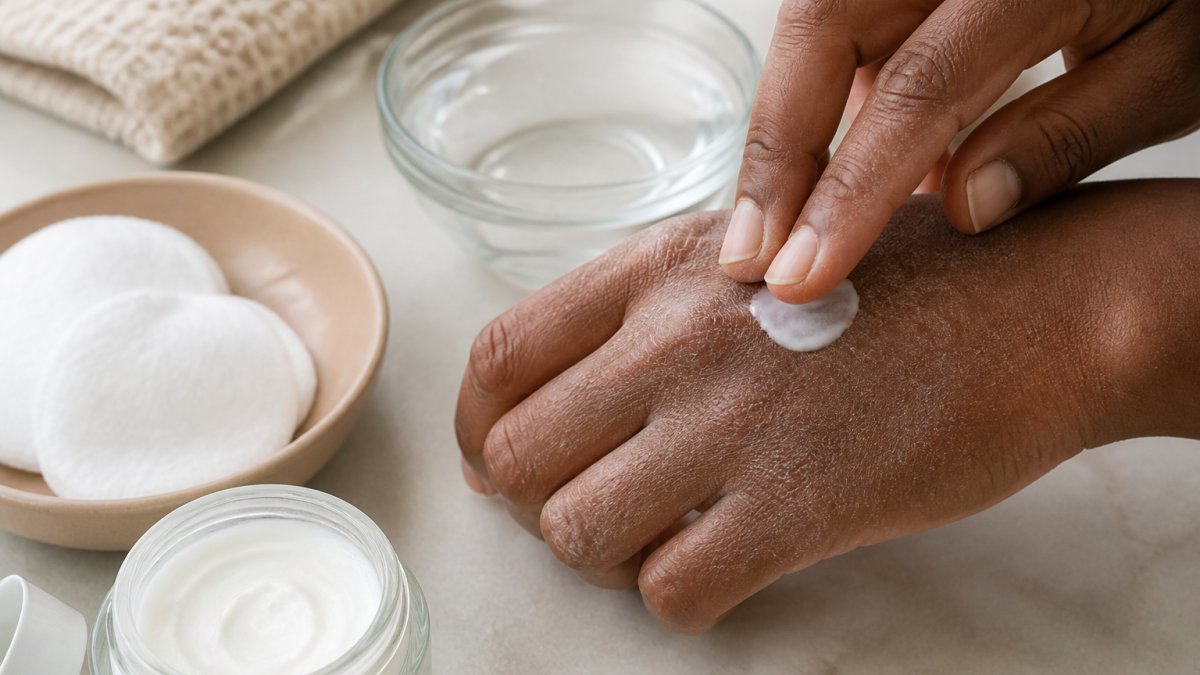
Application matters as much as product choice. Applying moisturizer to damp, visibly moist, not soaking wet, skin lets hydrating ingredients penetrate and spread evenly.
After cleansing, pat until about 70% dry, leaving visible moisture.
One or two pumps of lotion, or a dime-sized amount of cream, covers the face, less applied correctly beats more applied haphazardly.
This matters most in winter or dry climates, when ashiness is likeliest.
Key Ingredients That Hydrate Without Clogging Pores
What separates a formula that clears ashiness from one that just sounds good is how humectants, emollients, and occlusives are balanced, and whether the texture suits the area. A moisturizer ashy skin clog pores must pull water in, hold it there, and avoid a film that traps sebum and dead cells.
The three ingredient classes and what each one does
- Humectants draw water into the outer layer of skin. Glycerin is the most common and one of the best-studied; it is inexpensive, well tolerated, and effective at low percentages. Hyaluronic acid holds a great deal of water relative to its weight, but in dry indoor air it can pull moisture from deeper skin rather than from the environment if it is not sealed in with an emollient or occlusive. Urea at low concentrations (roughly 5 percent) is both a humectant and a mild keratolytic, which makes it useful on thickened, ashy areas like heels and elbows.
- Emollients soften and smooth the surface and fill the gaps between skin cells. Squalane, derived from olives or sugarcane, is lightweight and closely mimics skin sebum, which is why it is a frequent pick for acne-prone faces. Caprylic/capric triglyceride, a fractionated coconut-derived emollient, is another low-congestion option. Shea butter and other rich plant butters are excellent emollients for the body but are more likely to feel heavy on the face.
- Occlusives slow water loss by forming a breathable film. Petrolatum is the most effective occlusive available and is generally well tolerated, but it is heavy and best reserved for the body or for nighttime use on very dry patches. Dimethicone is a lighter occlusive that many noncomedogenic formulas rely on; it is not the same as the heavy, pore-clogging silicones some shoppers worry about. Ceramides are not occlusives in the strict sense, but they rebuild the barrier lipids that keep water in, and formulas that pair ceramides with cholesterol and fatty acids tend to produce the most durable improvement in dryness.
How to read a label for pore-clogging risk
Ingredient lists are ordered by concentration, so the first five to seven ingredients tell you most of what the product is. A few practical rules:
- Look for the humectant near the top and the occlusive near the bottom. A formula that leads with glycerin or hyaluronic acid and closes with dimethicone or ceramides is usually a good balance for combination or acne-prone skin.
- Treat "noncomedogenic" as a claim, not a guarantee. The label reflects testing on a limited panel, and individual skin can still react. A product marketed as noncomedogenic can still cause congestion in some people, especially if it contains high concentrations of rich butters or heavy oils.
- Watch for fragrance and essential oils if your skin is reactive. Fragrance is a common irritant and is often the reason a product that looked fine on paper causes redness or flaking.
- Distinguish face from body. A body lotion built around petrolatum or shea butter may be ideal for legs and elbows but too heavy for the face. The reverse is also true: a lightweight facial gel may disappear on ashy shins before it has done its job.
Ingredient combinations worth seeking out
- Glycerin plus ceramides plus squalane: draws water in, rebuilds the barrier, and softens without a heavy film. A common pattern in facial moisturizers for combination skin.
- Urea plus petrolatum: a body-focused pairing for thick, ashy areas such as heels, knees, and elbows. The urea helps thin the dead-cell layer while the petrolatum locks in water.
- Niacinamide plus hyaluronic acid: niacinamide supports the barrier and helps regulate oil, while hyaluronic acid adds hydration. This combination shows up often in formulas aimed at acne-prone skin that is also dry.
What to avoid depends on your skin, but a reasonable starting point is to skip formulas that lead with alcohol denat, heavy fragrance, or a long list of botanical extracts if you have reacted to products before. None of these ingredients is universally bad, but each raises the odds of irritation on sensitive, melanin-rich skin.
Why the same ingredient behaves differently on face and body
Shins, elbows, and knees are thicker with fewer sebaceous glands than facial skin, so they lose water faster and show ashiness more readily, a body moisturizer can carry a heavier occlusive load without facial congestion risk. Matching the ingredient profile to the area is the most useful habit for preventing ashiness without clogging pores.
Building a Daily Routine to Prevent and Treat Ashiness
Ashiness is usually a timing and technique problem as much as a formula problem. The goal is keeping the moisture barrier intact through the day, on face and body, without products heavy enough to congest pores.
Step 1: Rethink how you bathe
Long, hot showers strip natural oils and are a common reason ashiness returns within hours of moisturizing. Adjustments that help:
- Shorten showers to five to ten minutes and lower the water temperature to warm rather than hot.
- Use a gentle, fragrance-free cleanser on the body and reserve soap for the underarms and groin. Harsh bar soaps raise the skin's pH and weaken the barrier.
- Skip daily exfoliation. Physical scrubs and loofahs on dry, ashy skin can cause microtears and irritation. If you exfoliate, limit it to once or twice a week and use a gentle chemical exfoliant such as a low-percentage lactic acid lotion on the body.
Step 2: Apply moisturizer within three minutes of toweling off
The highest-impact habit is applying moisturizer while skin is still damp: on the body, within about three minutes of stepping out of the shower; on the face, after patting to roughly 70 percent dry.
Use enough body product to cover the area visibly, then massage in until it disappears, most people under-apply body lotion by a wide margin. A quarter-sized amount suits the face; legs and arms need considerably more.
Step 3: Layer for the area, not the whole body
| Area | Texture | Application |
|---|---|---|
| Face | Lightweight lotion or gel-cream | Morning and night, on damp skin, followed by SPF in the morning |
| Neck and chest | Same as face, or a slightly richer lotion | Morning and night |
| Arms and legs | Body lotion or cream with glycerin and an occlusive | After every shower, plus a second application at night if ashiness is visible |
| Elbows, knees, heels | Richer cream or ointment with urea or petrolatum | After showering, and again before bed |
A single product rarely works everywhere: a facial moisturizer may be too light for ashy shins, and a body cream rich enough for heels may be too heavy for the face. Keeping one product for the face and one for the body is a practical compromise.
Step 4: Reapply where ashiness shows
Ashiness on legs, elbows, and knees often reappears by mid-afternoon in winter or dry indoor air. Keep a small tube of body lotion at your desk or in your bag and reapply once during the day, reapplication maintains the barrier through low humidity, not a sign the first product failed.
Step 5: Protect the barrier overnight
Night is when skin repairs and the best window for richer products. On the body, apply a heavier cream or ointment to elbows, knees, and heels before bed, covered with cotton socks or sleeves to intensify. On the face, a slightly richer night moisturizer suits most skin types if it doesn't cause congestion; if acne-prone, patch test and watch for new bumps over one to two weeks.
Step 6: Patch test and know when to seek help
Before using a new product widely, apply a small amount to the inner forearm or behind the ear and wait 24 to 48 hours; stop if you see redness, itching, or swelling. Persistent ashiness that doesn't improve with consistent moisturizing, or comes with itching, cracking, or inflammation, can point to eczema or ichthyosis, see a clinician rather than applying more product.
A sample week
- Morning: gentle cleanse, moisturizer on damp face, SPF.
- After shower: body lotion within three minutes, richer cream on elbows, knees, and heels.
- Midday: reapply body lotion to legs and arms if ashiness is visible.
That's the whole routine: no long product list, no heavy pore-clogging formulas, just timing, the right texture per area, and enough consistency to let the barrier recover.
Frequently Asked Questions
What is the best moisturizer for ashy skin that doesn't clog pores?
The best moisturizer for ashy skin balances three elements: humectants (like hyaluronic acid) to draw moisture in, emollients (like squalane) to soften the skin barrier, and a noncomedogenic formula proven not to block pores. Look for lightweight gels or gel-creams over heavy butters. Dermatologists recommend products labeled noncomedogenic and tested to reduce transepidermal water loss. The right choice depends on whether your skin is also acne-prone, if so, prioritize oil-free, fast-absorbing formulas.
How can I tell if a moisturizer is making me break out?
Breakouts from moisturizer typically appear 1-2 weeks after starting use, often in areas where you applied the product. Pore-clogging moisturizers cause small bumps or whiteheads, while irritating formulas cause redness, burning, or flaking. Test new products on a small area first. If breakouts occur, stop use immediately. A noncomedogenic moisturizer should not cause new breakouts; if it does, the formula may not suit your specific skin chemistry, even if labeled correctly.
Should I use a cream or lotion for ashy skin?
For ashy skin, the choice between cream and lotion depends on your skin type and climate. Lotions are lighter and absorb faster, making them ideal for acne-prone or combination skin. Creams are richer and better for very dry skin, but some formulas clog pores. A gel-cream hybrid often works best for ashy skin, it provides deep hydration without heaviness. In winter or dry climates, a noncomedogenic cream may be necessary; in humid seasons, a lotion suffices. Test both textures to see which prevents ashiness without causing breakouts.
How often should I moisturize dry, ashy skin?
Apply moisturizer twice daily, morning and night, on damp skin to lock in hydration and prevent ashiness. After cleansing, pat skin almost dry but leave it slightly damp, then apply your moisturizer within 60 seconds. This technique maximizes the humectant's ability to draw moisture into the skin barrier. If ashiness persists despite twice-daily application, you may need a richer formula or an additional layer of occlusive product at night. Consistency matters more than frequency; skipping applications allows the skin barrier to dry out again.
Ashy skin is frustrating, but it's also preventable. The right moisturizer, one that hydrates deeply while respecting your skin's need for clarity, changes everything. Clear Essence® combines noncomedogenic formulations with ingredients proven to address dryness and ashiness in melanin-rich skin. Shop now and experience the difference a dermatologist-tested, science-backed approach makes.