 blog
Gentle Skincare for Reactive Dark Skin: A 2026 Guide
Table of Contents
- Why Reactive Skin on Melanin-Rich Complexions Needs a Different Approach
- Building a Gentle Skincare Routine for Reactive Skin
- Sensitive Skin Products for Dark Spots: Ingredients That Work Without Irritation
- How to Calm Reactive Skin: Avoiding Irritation Triggers
- Patch Testing Skincare Products: A Practical Protocol
- Sun Protection for Deeper Skin Tones: Preventing Dark Spots Before They Form
- When to Seek Professional Care
- Conclusion: Your Path to Calm, Clear Skin
- Frequently Asked Questions
Last Updated: October 21, 2026
Why Reactive Skin on Melanin-Rich Complexions Needs a Different Approach
Reactive skin on melanin-rich complexions faces a unique challenge: the same irritants that cause temporary redness on lighter skin tones can trigger post-inflammatory hyperpigmentation that lingers for months, which is why gentle skincare reactive dark skin requires a fundamentally different approach.
When your skin barrier is compromised, inflammation doesn't just create redness. According to research published in the National Library of Medicine's PubMed Central, a consistent skin care regimen with mild cleansers and moisturizers leads to measurable improvements in skin health and quality of life for people with dry, reactive skin.
The fix isn't more actives or stronger treatments. It's the opposite: a deliberate focus on barrier repair, hydration, and soothing ingredients that prevent irritation before it triggers pigmentation. At Clear Essence®, we've built our entire approach around this principle.
Below, we'll walk you through a complete gentle skincare routine for reactive skin that addresses dark spots without causing the irritation that makes them worse.
Building a Gentle Skincare Routine for Reactive Skin
A proper routine for gentle skincare reactive dark skin follows three non-negotiable steps: cleanse without stripping, hydrate and restore, then soothe and protect. Skip any one of these, and your skin stays reactive.
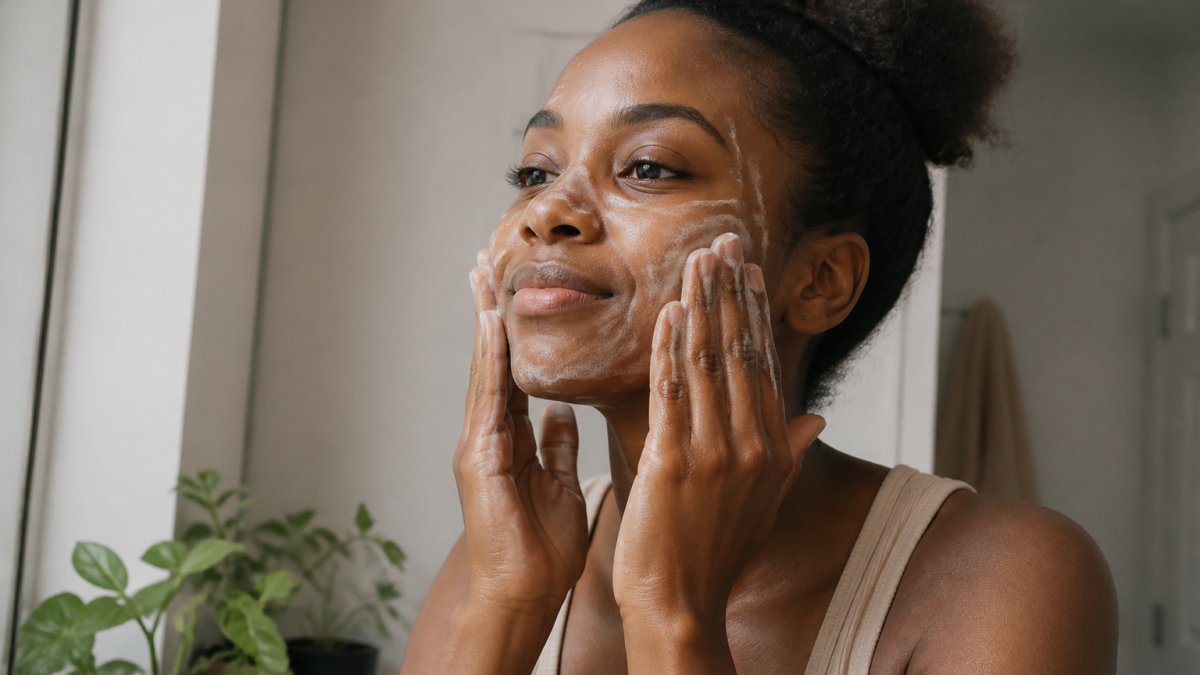
Step 1: Cleanse Without Stripping
Your cleanser is the foundation. A harsh cleanser damages your skin barrier, triggers inflammation, and sets off the pigmentation cascade you're trying to prevent.
Look for creamy cleansers, hydrating cleansers, or milk cleansers, anything that feels nourishing rather than squeaky. Avoid foaming cleansers entirely. According to Bioderma's skincare guidance for sensitive skin, gentle cleansing followed by soothing moisturization is the ideal foundation for reactive, redness-prone skin.
Use lukewarm water, not hot. Hot water dilates blood vessels and increases inflammation. Massage your cleanser in gentle circular motions for 30-45 seconds, then rinse thoroughly. Pat dry, don't rub.
Step 2: Hydrate and Restore the Barrier
After cleansing, your skin needs immediate hydration and barrier support. This is where ceramides and glycerin become essential.
Ceramides are lipids that form the structural foundation of your skin barrier. When your barrier is reactive, ceramides are depleted. Replenishing them is non-negotiable.
Apply a hydrating toner or essence first if your skin is very dry. Then layer a moisturizer rich in ceramides and glycerin. The order matters: lighter hydrating layers first, then richer creams.
For reactive, melanin-rich skin, avoid thick occlusive creams unless you're using them as a final night layer. Your daytime moisturizer should hydrate and support your barrier without feeling heavy or pore-clogging.
Step 3: Soothe and Protect
Once your barrier is hydrated, add a soothing layer. Ingredients like niacinamide (vitamin B3) and licorice extract calm inflammation, reduce redness, and help prevent the irritation-triggered pigmentation that makes reactive skin worse.
Niacinamide strengthens your barrier, regulates oil, and has anti-inflammatory properties. Licorice extract contains compounds that inhibit tyrosinase, the enzyme responsible for melanin production. Together, they address both immediate irritation and the pigmentation response that follows.
Apply these as a serum or essence after your moisturizer. Then, during the day, use a broad-spectrum sunscreen. Sun exposure darkens existing dark spots and triggers new pigmentation.
Sensitive Skin Products for Dark Spots: Ingredients That Work Without Irritation
The challenge with treating dark spots on reactive skin is that many brightening ingredients are irritating. Hydroquinone, tretinoin, and high-concentration glycolic acid can all trigger inflammation and make your skin more reactive. You need alternatives that fade dark spots without compromising your barrier.
Ceramides and Glycerin for Barrier Support
Ceramides and glycerin aren't brightening ingredients, they're barrier-repair ingredients. But here's why they matter for dark spots: a compromised barrier leads to chronic inflammation, which leads to post-inflammatory hyperpigmentation. By repairing your barrier, you stop the cycle that creates dark spots in the first place.
Think of ceramides and glycerin as preventive. They won't fade existing dark spots on their own, but they create the stable, non-reactive environment where other ingredients can work effectively. Without them, even gentle brighteners will trigger irritation and make your skin worse.
| Ingredient | Function | Best For |
|---|---|---|
| Ceramides | Barrier repair and structural support | All reactive skin types |
| Glycerin | Deep hydration and water retention | Dry, reactive skin |
| Niacinamide | Inflammation reduction and barrier strengthening | Reactive skin with redness |
| Licorice Extract | Melanin inhibition and soothing | Dark spots and irritation |
| Hyaluronic Acid | Lightweight hydration | All skin types, including oily reactive skin |
Niacinamide and Licorice Extract for Brightening
Niacinamide and licorice extract are the safest brightening combination for reactive, melanin-rich skin. Neither is harsh. Both have anti-inflammatory properties, so they actually calm your skin while addressing pigmentation.
Niacinamide works by regulating sebum, strengthening your barrier, and reducing inflammation. It also has a mild brightening effect through its ability to regulate melanin production.
Use both together. Apply a niacinamide serum or essence after cleansing and before your moisturizer. Then layer a licorice-extract product as a targeted treatment on dark spots, or choose a moisturizer that contains both ingredients.
Hyaluronic Acid for Deep Hydration
Hyaluronic acid is a humectant, it pulls water from the air and deeper skin layers into your stratum corneum (the outermost layer). For reactive skin, this deep hydration is essential because dehydration makes irritation worse.
Apply hyaluronic acid serums to damp skin immediately after cleansing. The moisture on your skin allows the hyaluronic acid to work more effectively. Follow with your moisturizer to seal in the hydration.
Hyaluronic acid doesn't directly fade dark spots, but dehydrated skin is reactive skin. By maintaining hydration, you create a baseline of skin health that makes it easier for other ingredients to work and harder for irritation to trigger new pigmentation.
How to Calm Reactive Skin: Avoiding Irritation Triggers
Calming reactive skin means preventing irritation in the first place. This requires knowing which ingredients and product formulations trigger reactions on melanin-rich skin.
Ingredients to Skip
Certain ingredients are known irritants for reactive skin. Avoid them entirely, especially if your skin is currently inflamed or you have active dark spots.
Alcohol denat (denatured alcohol) is drying and irritating. It strips your barrier and increases inflammation.
Fragrance, whether synthetic or natural, is an irritant for reactive skin. Essential oils like lemon, tea tree, and peppermint are particularly problematic. They feel "active" but they're actually damaging your barrier.
Sulfates in cleansers are stripping and inflammatory. Look for sulfate-free formulas. Retinol and retinoids are powerful but too strong for reactive skin in the acute phase.
Product Formulation Red Flags
Beyond specific ingredients, certain formulation choices signal a product is wrong for reactive skin.
If a cleanser leaves your skin feeling tight or squeaky, it's too stripping. If a moisturizer pills or balls up on your skin, it's not formulated for your skin type.
Lightweight, watery formulations often contain high alcohol content or other volatile ingredients. They feel fresh but they're drying.
Products labeled "for sensitive skin" but containing fragrance or high-concentration actives are misleading. Read the ingredient list, not the marketing claim. Non-stripping, fragrance-free, and alcohol-free are the markers of a reactive-skin-appropriate product.
Patch Testing Skincare Products: A Practical Protocol
Before introducing any new product to your full face, patch test it. This simple step prevents the irritation that can trigger weeks of dark spots.
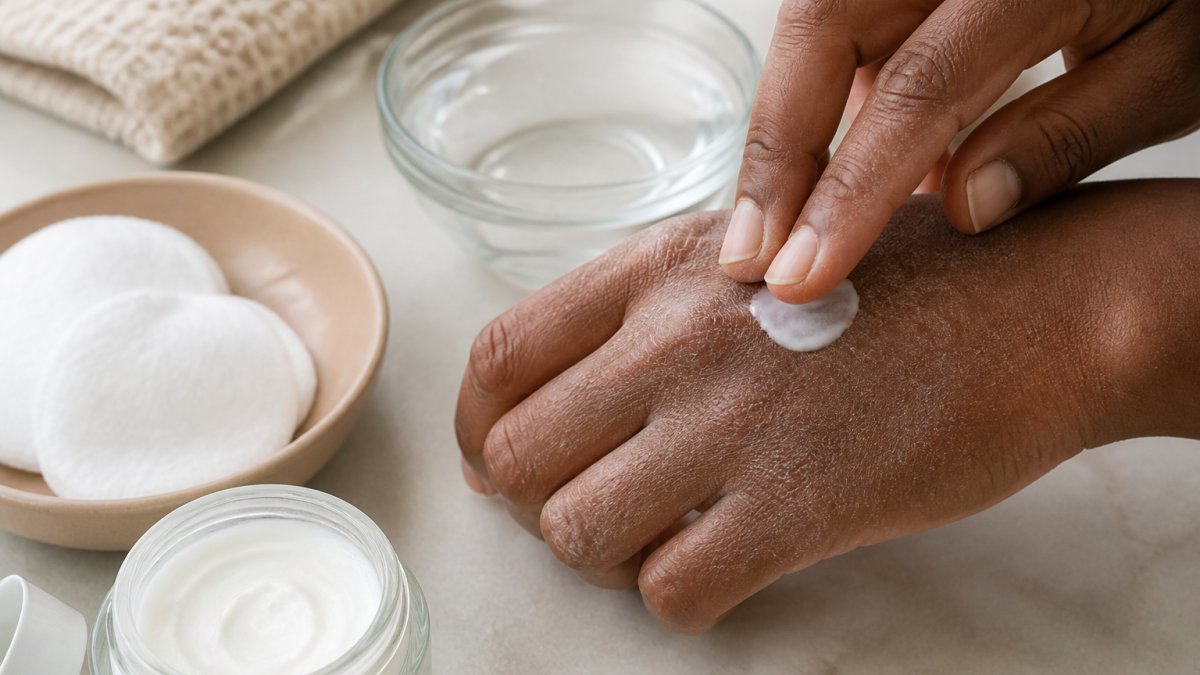
Here's the protocol: Apply a small amount of the new product to a discrete area, your inner arm, behind your ear, or a small section of your jawline.
When you do introduce it to your face, use it alone for 2-3 days before layering with other products. This isolates any reaction to the specific product.
Keep a simple log: product name, introduction date, and any reactions. This helps you identify patterns.
Sun Protection for Deeper Skin Tones: Preventing Dark Spots Before They Form
Sun exposure is the fastest way to darken existing dark spots and create new ones.
The challenge: many sunscreens leave a white cast on deeper skin tones.
Look for sunscreens formulated specifically for deeper skin tones. These use smaller particle sizes, different formulation ratios, or hybrid mineral-chemical formulas that minimize white cast.
Apply sunscreen generously, most people use half the recommended amount, which cuts protection in half. Use one-quarter teaspoon for your face.
Broad-spectrum SPF 30 is the minimum. SPF 50 provides slightly better protection and is worth the extra step if you're prone to dark spots.
When to Seek Professional Care
If your reactive skin doesn't improve after 8-12 weeks of consistent, gentle care, or if you develop severe redness, swelling, or signs of infection, consult a dermatologist. Some reactive skin conditions require professional treatment.
Post-inflammatory hyperpigmentation can fade on its own over time, but dermatologists can accelerate the process with professional treatments like chemical peels, laser therapy, or prescription-strength brightening agents.
Rosacea, seborrheic dermatitis, and other chronic skin conditions can mimic reactive skin. A dermatologist can diagnose these and recommend targeted treatment.
If you're using prescription treatments like tretinoin or hydroquinone, regular dermatology check-ins ensure you're using them safely and effectively.
Conclusion: Your Path to Calm, Clear Skin
Reactive skin on melanin-rich complexions responds best to barrier repair, hydration, and gentle soothing, not stronger actives or complex routines. The approach Clear Essence® recommends prioritizes prevention of irritation over aggressive treatment.
Our dermatologist-tested formulas are specifically designed for melanin-rich skin, combining ceramides for barrier support, niacinamide for inflammation reduction, and gentle hydrating ingredients that work without triggering the reactivity that makes dark spots worse. Start with a simple three-step routine, patch test every new product, and commit to consistent sunscreen use. Your skin will thank you.
Shop now and discover the difference a routine designed for your skin actually makes.
Frequently Asked Questions
How do I know if my skin is reactive, and what causes it on darker skin tones?
Reactive skin shows redness, irritation, rosacea-like flare-ups, or heightened sensitivity to products. On melanin-rich skin, reactivity often triggers post-inflammatory hyperpigmentation, new dark spots form after irritation fades. Common causes include harsh cleansers, fragrance, sulfates, and over-exfoliation. Patch testing new products on your inner arm for 24-48 hours helps identify triggers before they reach your face.
What's the best gentle skincare routine for reactive dark skin?
Start with a creamy, non-stripping cleanser to remove impurities without damaging your skin barrier. Follow with a hydrating toner or essence containing glycerin or hyaluronic acid. Apply a barrier-supporting moisturizer with ceramides and niacinamide to soothe redness and protect against irritation. Use fragrance-free, dermatologist-tested products formulated for sensitive skin. Sunscreen with at least SPF 30 is essential, it prevents UV-triggered dark spots and stops existing hyperpigmentation from darkening.
Can irritation actually cause dark spots on melanin-rich skin?
Yes. When reactive skin becomes inflamed or irritated, melanin production increases in response. After the redness fades, post-inflammatory hyperpigmentation (dark spots) remains. This is why a gentle routine that avoids irritation triggers is so important for preventing new dark spots. Using soothing ingredients like licorice extract and niacinamide reduces inflammation before it triggers pigmentation.
How do I patch test a new skincare product safely?
Apply a small amount of the product to clean skin on your inner arm or behind your ear, areas less visible and similar in sensitivity to your face. Wait 24-48 hours and observe for redness, itching, burning, or any irritation. If no reaction occurs, apply a small amount to your jawline for 3-5 days before using it on your full face. This protocol is especially important for reactive skin, as it prevents full-face irritation and the dark spots that follow.